The Studio
Being a one-woman team has its pros and its cons.
In the fall of 2020, the COVID-19 pandemic presented me with the biggest con - having over a hundred expert scientists eager to help spread useful information and having no tools (or digital skills) to do so.
My challenge was to create a tool that would create high-quality content with minimal assistance from me. The reality was that these scientists were busy in the lab doing much more important things than learning how to use a camera. However, the pandemic highlighted a gap in communication between these researchers and the public and we needed to address it.
I designed the Studio in collaboration with former colleague Jeff Shoup and based off our combined experiences with a previous academic self-serve studio. It took approximately 5 months to complete the entire process from designing and purchasing to construction and testing. By August of 2021, the Studio was complete and made available to all members of the institute and department.
The Studio aims to encourage creativity and collaboration among our researchers by creating new opportunities for learning, teaching, publications, and overall visibility of VI4 faculty, trainees, students, and staff. The idea being that these scientists can have a video studio ready to go for them to pop in a record content when their schedules allowed.
When I introduce them to the studio, my bit always starts with this... I'm not a scientist. In fact, I was never really good at science. I am a communications professional. My job is to use my skills to get the science out of you and out to the world as quickly and accurately as possible.
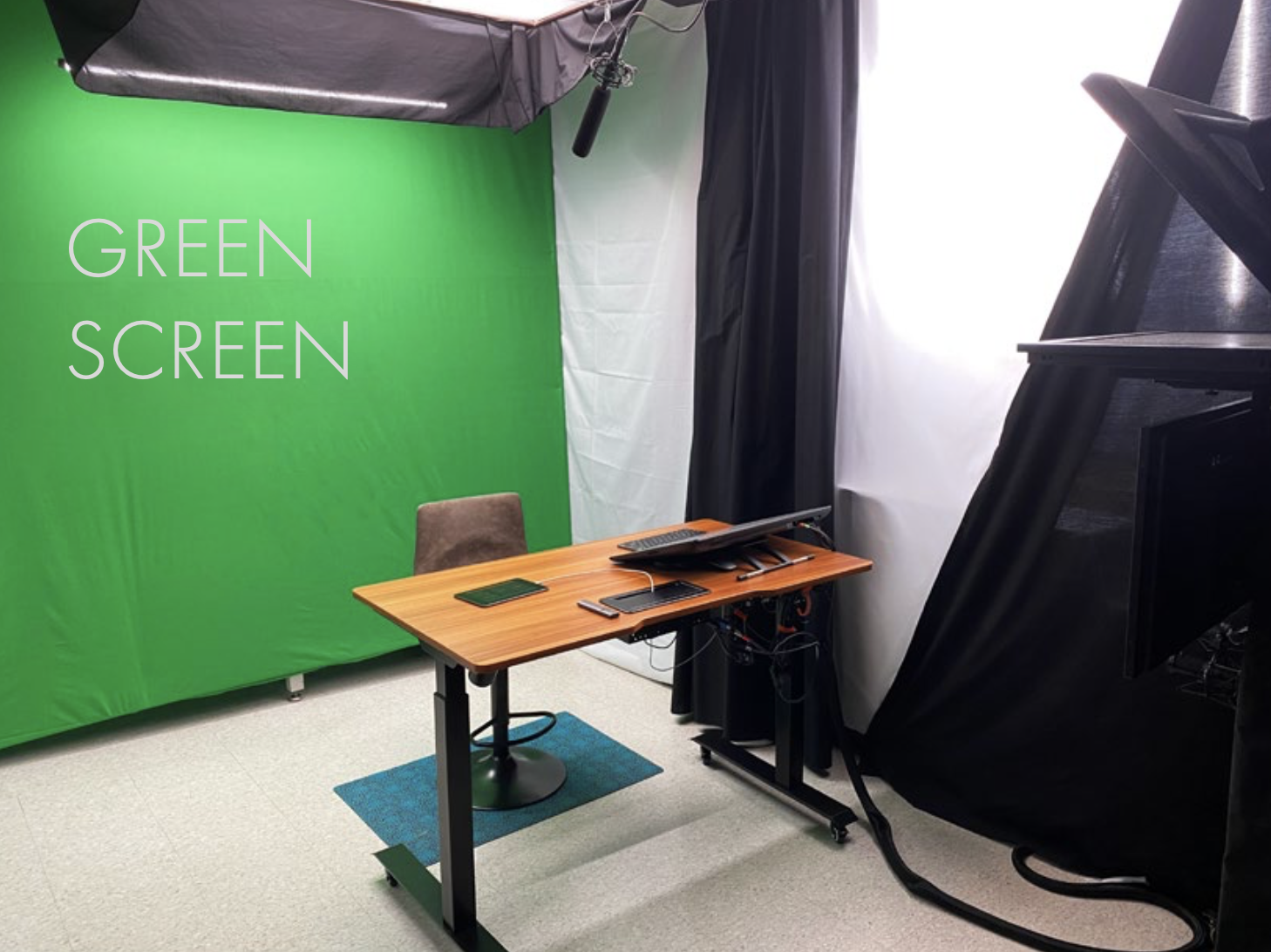
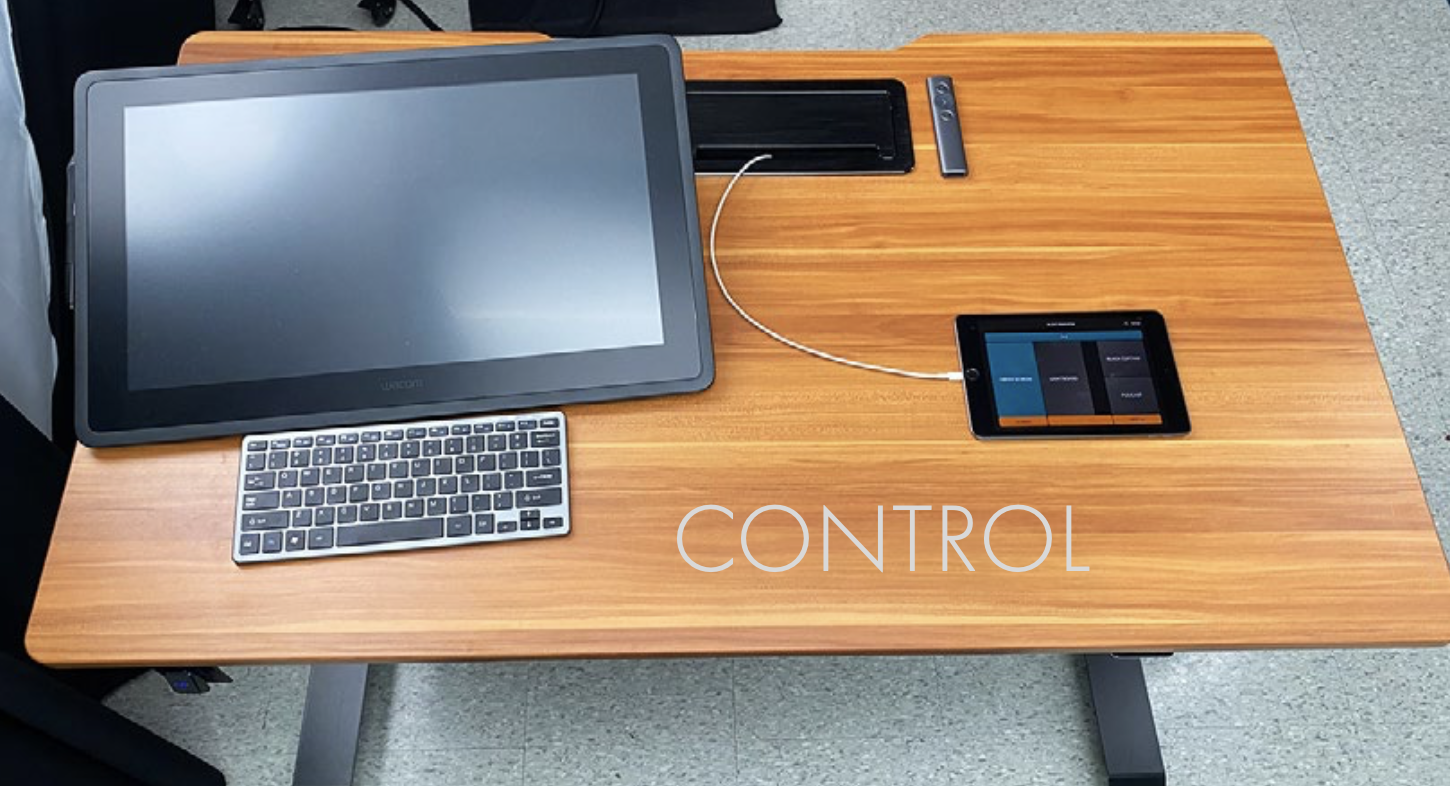
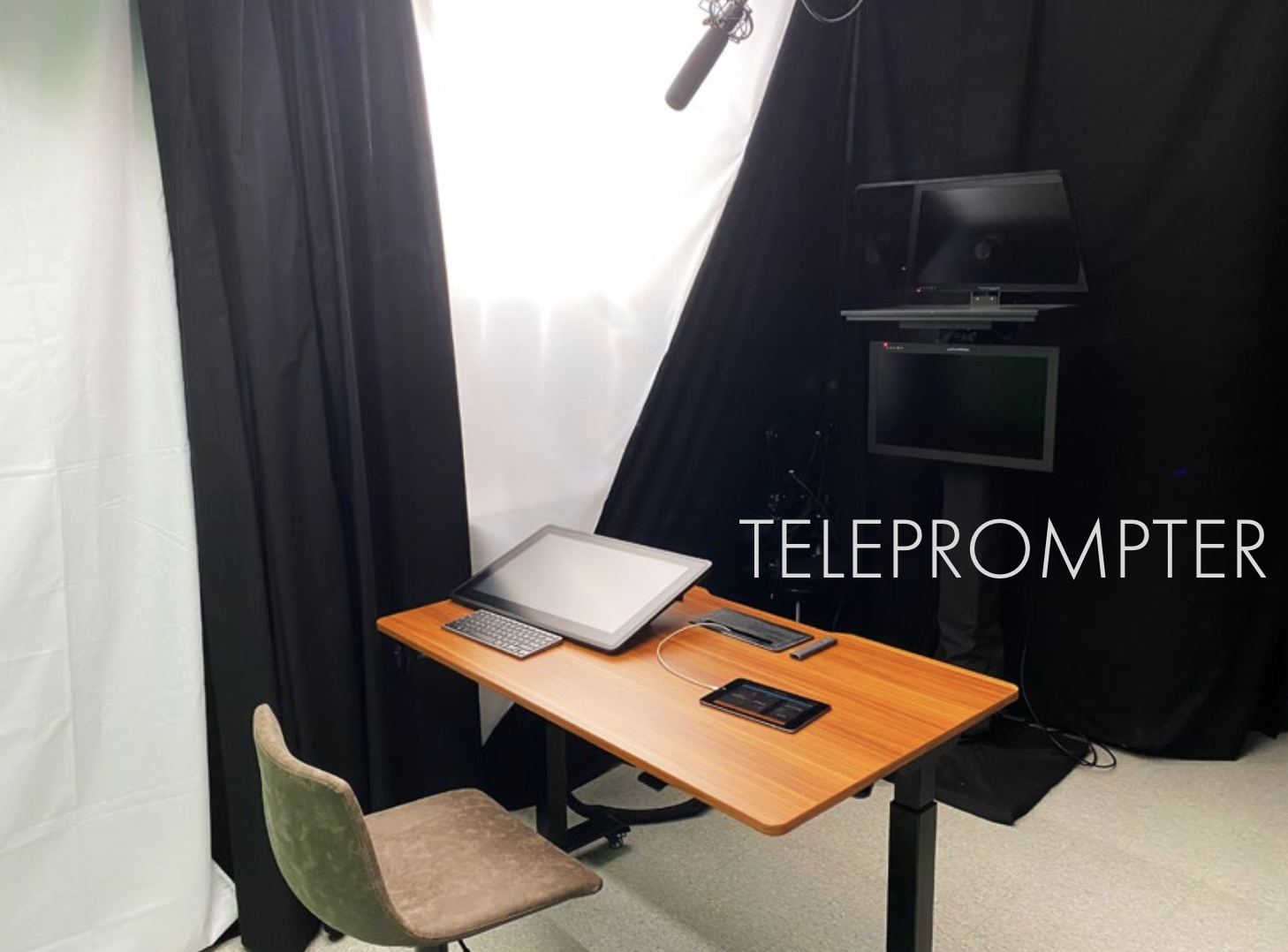
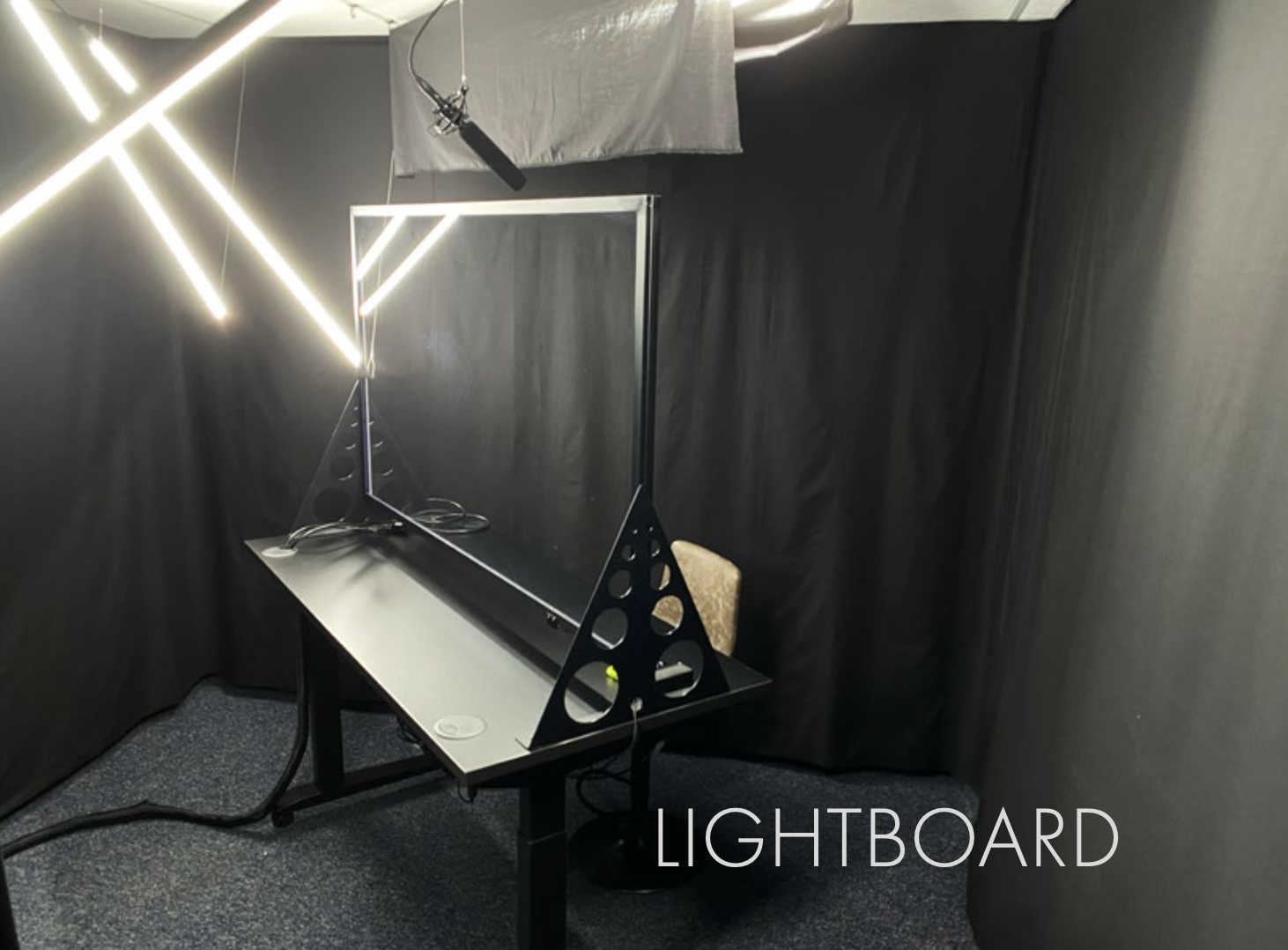
The goal of the Studio is to enable users to easily communicate with their respective audiences through high-quality audio and video content. It's equipped to produce interviews, lectures, screen capture and light board annotation style videos; it is a tool for users to develop their digital communication skills.
Located in the main academic research building, the studio consists of two workspaces with one iPad control device that keeps the workflows simple while allowing for creative flexibility.
The main room has a green screen background and is equipped with an electronically adjustable teleprompter and a Panasonic Cinema 4K camera; ideal for broadcast, live streaming, and video production.
The workstation is setup on a 48-inch electronically adjustable height desk with wheels for comfortable ergonomic flexibility. This space also has a 22-inch Wacom Cintiq Creative Pen Display that doubles as a user monitor and an annotation tablet.
The second workspace is setup with a matching Panasonic camera and outfitted with a 66-inch Learning Glass lightboard with an electronically adjustable table. The lightboard offers a versatile tool for illustrating complex material while maintaining connection with the audience through eye contact and gesture.
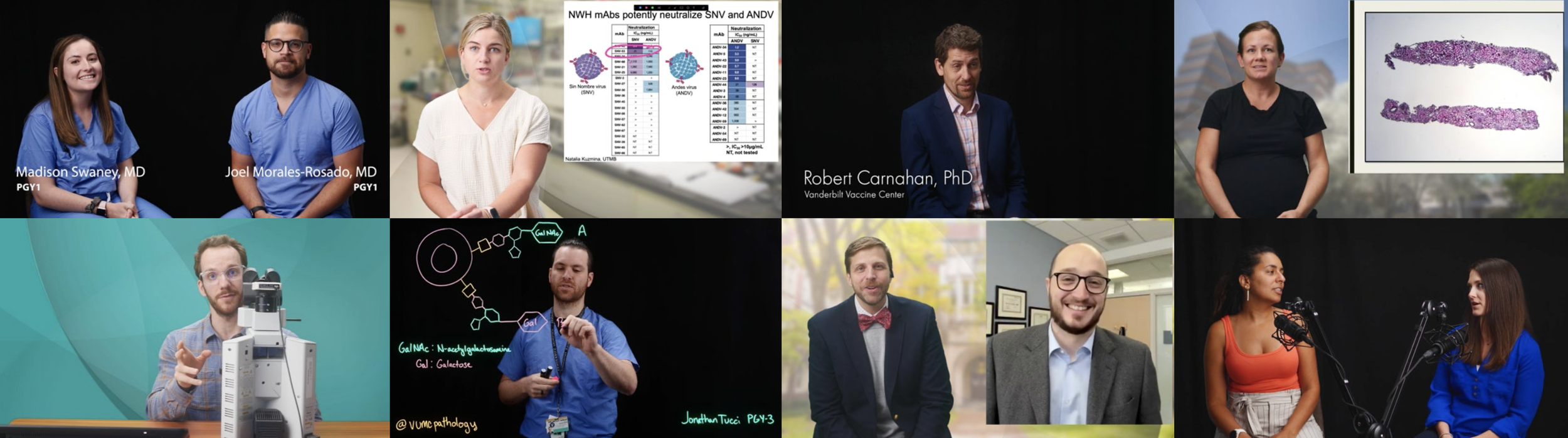
The Studio’s key features include:
Green screen video production with no postproduction.
Black curtain interviews and lectures.
Teleprompter for the main studio space that will allow users to read a script, view their PowerPoint, or other materials.
Screen capture videos with great audio and easy screen annotation.
Live streaming direct to Zoom.
Ability to have a remote guest added directly into video recordings.
Light board setup allowing those who feel most comfortable writing while they teach to be able to add this style of video.
Podcasting and voice over setup.
“The new studio is a level above in what other institutions are able to offer…such a unique and amazing teaching asset”
